
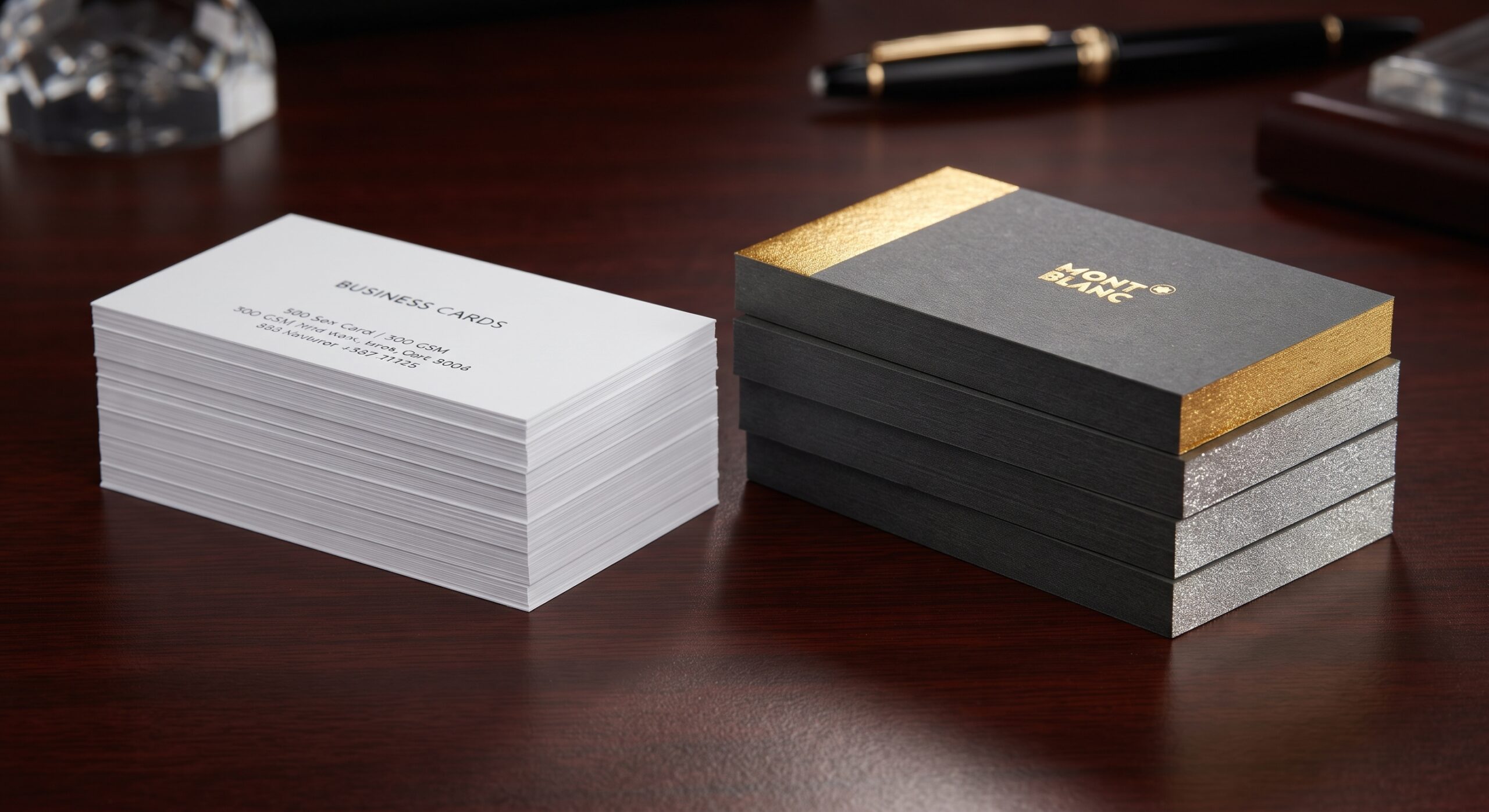
When you want to impress elite clientele with edge foiling business cards, first impressions happen in fractions of a second. When you slide a card across a boardroom table or hand it to a prospective investor at an exclusive networking event, that tiny piece of cardstock speaks volumes before you even utter a single word. For entrepreneurs, luxury real estate agents, corporate consultants, and high-end agency owners, a standard, flimsy business card simply won’t cut it.
When competing for high-net-worth clients, every detail of your brand identity must radiate exclusivity, precision, and quality. Two major contenders battle for attention in the corporate networking world: standard business cards and edge-foiling business cards.
If you want to win over elite clientele, which finish actually delivers? Let’s break down the psychology, aesthetics, and practical impacts of both choices to see which one deserves a spot in your cardholder.
Understanding Edge Foiling Business Cards vs. Standard Options
- Standard Business Cards: Usually printed on 300 GSM to 400 GSM cardstock with a matte or gloss finish. They are clean, professional, cost-effective for bulk printing, and serve their fundamental purpose of sharing contact details.
- Edge Foiling Business Cards: Crafted on ultra-thick, heavy-duty cardstock (often 600 GSM or higher), these cards feature a striking metallic foil layer stamped directly onto the outer edges (the thickness of the card). When stacked in a cardholder, they display a brilliant hint of gold, silver, rose gold, or holographic shine, while the front and back maintain an understated, elegant design.
The Psychology of First Impressions with High-End Clients
High-end clients—whether luxury buyers, C-suite executives, or high-end investors—are accustomed to dealing with quality. They subconsciously evaluate your brand through tactile and visual cues.
- The Tactile Sensation (Haptic Feedback): Human beings form deep emotional connections through touch. When a client feels a thick, weighted card with a shimmering metallic edge, their brain instantly registers value, stability, and premium craftsmanship.
- The Visual Pop from Every Angle: Standard cards blend into the background when placed face-up on a table. Edge-foiled cards, however, catch the light from any angle. Even when stacked face down, their metallic rims command attention, making them an instant conversation starter.
Edge Foiling vs. Standard Business Cards: Direct Comparison
| Feature | Standard Business Cards | Edge Foiling Business Cards |
|---|---|---|
| Card Thickness | Standard (300–400 GSM) | Ultra-Thick / Premium (600+ GSM) |
| Visual Impact | Clean, traditional, corporate-standard | Luxurious, eye-catching, dimensional |
| Durability | Prone to bent corners and wear over time | Rigid, highly durable, resistant to fraying |
| Client Perception | Approachable, budget-friendly, mass-appeal | Exclusive, professional, high-authority |
| Best Used For | Large-scale networking, everyday flyers, casual meetups | C-suite meetings, luxury branding, elite B2B sales |
Why Edge Foiling Wins Over High-End Clients

When you are pitching a high-ticket service or a luxury product, your marketing collateral must match your pricing structure. Handing a cheap, thin card to a client you are charging thousands of dollars creates a subtle psychological disconnect.
- It Signals Success and Attention to Detail: Edge foiling communicates that you do not cut corners. If you invest this much care into your physical business card, clients assume you will deliver that same level of immaculate detail to your actual work.
- Memorability Factor: At a conference with hundreds of attendees, standard cards get tossed into drawers or forgotten. Edge-foiled cards are unique objects of art; people keep them, show them to colleagues, and remember who gave it to them.
When Are Standard Business Cards Still Useful?
To be fair, standard business cards have their place. If your business relies on high-volume distribution—such as retail counters, food delivery packaging inserts, or mass-market local flyers—printing thousands of standard cards is practical and economical. But for direct, face-to-face high-end networking, they lack the competitive edge.
Conclusion
Your business card is a physical extension of your brand equity. While standard business cards get the basic job done, edge-foiling business cards act as a silent closer, instantly elevating your perceived value before you pitch a single idea. If your goal is to close high-end clients, upgrading your print finish is one of the highest-ROI investments you can make for your brand identity.
Ready to make a lasting impression? Explore premium custom printing solutions at Traders Junction to design business cards that command respect in any room.